Tampilkan postingan dengan label Mellitus. Tampilkan semua postingan

Jumat, 04 September 2020

thumbnail

4. Mellitus Diabetes

Type 2 Diabetes Mellitus Guide Causes Symptoms And

4 3 Diabetes Mellitus

Diabetes mellitus is a disease that prevents your body from properly using the energy from the food you eat. diabetes occurs in one of the following situations: the pancreas (an organ behind your stomach) produces little insulin or no insulin at all. Diabetes mellitus (dm), commonly known as diabetes, is a group of metabolic disorders characterized by a high blood sugar level over a prolonged period of time. symptoms often include frequent urination, increased thirst, and increased appetite. The prognosis in people with diabetes varies. it depends on how well an individual modifies his or her risk of complications. if blood sugar is not well controlled, it can increase a person's risk of heart attack, stroke, and kidney disease, which can result in premature death. disability due to blindness, amputation, heart disease, stroke, and nerve damage may occur. some people with diabetes become dependent on dialysis treatments because of kidney failure.

Type 1 diabetes is a lifelong illness. usually, type 2 diabetes is also life-long. however, people with type 2 diabetes can sometimes restore their blood sugar levels to normal just by eating a healthy diet, exercising regularly, and losing weight. gestational diabetes usually goes away after childbirth. however, women with gestational diabetes are at high risk for developing type 2 diabetes later in life. in people with diabetes, aging and episodic illnesses can cause the body's insulin resist Type 1 diabetes is always treated with insulin injections. in most cases, type 2 diabetes treatment begins with weight reduction through diet and exercise. a healthy diet for a person with diabetes is low in total calories, free of trans fats and nutritionally balanced, with abundant amounts of whole grains, fruits and vegetables, and monounsaturated fats. most people with type 2 diabetes need drug therapy to control blood sugar. however, it is possible to achieve normal blood sugar levels with Diabetes mellitus refers to a group of diseases that affect how your body uses blood sugar (glucose). glucose is vital to your health because it's an important source of energy for the cells that make up your muscles and tissues. it's also your brain's main source of fuel. the underlying cause of diabetes varies by type.

4. Mellitus Diabetes

Diabetes Wikipedia

Diabetes mellitus, commonly known as diabetes, is a metabolic disease that causes high blood sugar. the hormone insulin moves sugar from the blood into your cells to be 4. mellitus diabetes stored or used for energy.

Type 1 diabetes was previously called insulin-dependent diabetes mellitus (iddm) or juvenile-onset 4. mellitus diabetes diabetes. type 1 diabetes develops when the body's immune system destroys pancreatic beta cells, the only cells in the body that make the hormone insulin that regulates blood glucose. Diabetes is diagnosed through blood tests that detect the level of glucose in the blood. 1. fasting plasma glucose (fpg) test. a blood sample is taken in the morning after you fast overnight. a normal fasting blood sugar level is between 70 and 100 milligrams per deciliter (mg/dl). diabetes is diagnosed if the fasting blood sugar level is 126 mg/dl or higher. 2. oral glucose tolerance test (ogtt). your blood sugar is measured two hours after you drink a liquid containing 75 grams of glucose. American diabetes association www. diabetes. org/ academy of nutrition and dietetics www. eatright. org diabetes a-z www. niddk. nih. gov/health-information/diabetes. About 50 percent of people with type 2 diabetes don't experience any symptoms and don't know they have the disease. ucsf health medical specialists have reviewed this information. it is for educational purposes only and is not intended to replace the advice of your doctor or other health care provider.

Diabetes Mellitus Types Risk Factors Symptoms Treatments

Type 1 diabetes cannot be prevented. you can decrease your risk of developing type 2 diabetes. if a close relative—particularly, a parent or sibling—has type 2 diabetes, or if your blood glucose test shows \\"pre-diabetes\\" (defined as blood glucose levels between 100 and 125 mg/dl), you are at increased risk for developing type 2 diabetes. you can help to prevent type 2 diabetes by 1. maintaining your ideal body weight. 2. exercising regularly—such as a brisk 4. mellitus diabetes walk of 1-2 miles in 30 minutes—at le Diabetes mellitus is a condition defined by persistently high levels of sugar (glucose) in the blood. there are several types of diabetes. the two most common are called type 1 diabetes and type 2 diabetes. during digestion, food is broken down into its basic components.

Diabetes mellitus guide: causes, symptoms and treatment options.

If you have diabetes, see your doctor regularly. people with high blood sugar levels have a higher risk of dehydration. contact your doctor immediately if you develop vomiting or diarrhea and are not able to drink enough fluids. monitor your blood sugar as advised by your health care team. report any significant deviations in blood sugar levels. Step 2: know your diabetes abcs. talk to your health care team about how to manage your a1c, blood pressure, and cholesterol. this can help lower your chances of having a heart attack, stroke, or other diabetes problems. Type 2 diabetes is also called type 2 diabetes mellitus and adult-onset diabetes. that's because it used to start almost always in middleand late-adulthood. however, more and more children and teens are developing this condition. type 2 diabetes is much more common than type 1 diabetes, and is really a different disease. Diabetes initially might not cause any symptoms. it can sometimes be caught early with a routine blood test before a person develops symptoms. when diabetes does cause symptoms, they may include: 1. excessive urination 2. excessive thirst, leading to drinking a lot of fluid 3. weight loss. people with diabetes also have an increased susceptibility to infections, especially yeast (candida) infections. when the amount of insulin in the blood stream is too low, extremely high blood sugar levels c

Diabetes mellitus is a condition defined by persistently high levels of sugar (glucose) in the blood. there are several types of diabetes. the two most common are called type 1 diabetes and type 2 diabetes. during digestion, food is broken down into 4. mellitus diabetes its basic components. carbohydrates are broken down into simple sugars, primarily glucose. glucose is a critically important source of energy for the body's cells. to provide energy to the cells, glucose needs to leave the bloodstream and get insid More 4. diabetes mellitus images.

See more videos for 4. diabetes mellitus. See full list 4. mellitus diabetes on drugs. com. See full list on drugs. com.

Jumat, 14 Agustus 2020

thumbnail

7 Mellitus Diabetes Jnc

The jnc 7 recommendations are consistent with guidelines from the american diabetes association (ada), which has also recommended that bp in diabetics be controlled to levels of 130/80mmhg or lower. 44-46 whatever the goal level, rigorous control of bp is paramount for reducing cvd mortality and morbidity. 44 to achieve goal bp in diabetics. The application of jnc 7 guidelines significantly reduced the proportion of dm patients at target bp goal from 42. 6%% to 31. 4% pmid: 16792436 [indexed for medline] publication types: research support, non-u. s. gov't; mesh terms. aged; antihypertensive agents/therapeutic use* blood pressure; diabetes mellitus, type 1/complications* diabetes mellitus, type 1/drug therapy; diabetes mellitus, type 2/complications* diabetes mellitus, type 2/drug therapy; female; guideline adherence; humans.

Blood Pressure Goal Attainment According To Jnc 7 Guidelines

Pdf Hypertension And Type 2 Diabetes A Crosssectional

Jnc7 Treatment Guidelines Goals And Recommendations

The seventh report of the joint national committee on.

More jnc 7 diabetes mellitus images. Pressure (jnc 7) has recommended a. primary and secondary outcome measures the primary outcome measures were diabetes mellitus (dm), hypertension (htn) and overweight/obesity. the study. The jnc-7, kdoqi, and ada guidelines recommend the use of either ace inhibitors or arbs as initial therapy to achieve the blood pressure target in patients with type 2 diabetes mellitus. if one. Diabetes jnc 7 guidelines ophthalmoplegia medscape gestational diabetes some pregnant women with gestational diabetes have the symptoms of diabetes that are associated with high blood glucose (hyperglycemia).

Diabetes And Hypertension A Comparative Review Of Current

The jnc 7 recommendations are consistent with guidelines from the american diabetes association (ada), which has also recommended that bp in diabetics be controlled to levels of 130/80mmhg or lower. whatever the goal level, rigorous control of bp is paramount for reducing cvd mortality and morbidity. The seventh report of the joint national committee on prevention, detection, evaluation, and treatment of high blood pressure (jnc 7) has recommended a downward shift in target blood pressure to <130/80 mm hg in diabetic patients, thus operatively setting a new threshold level for the definition of hypertension at 130/80 mm hg. Blood pressure control and prescribing patterns in patients with hypertension and comorbid type 2 diabetes mellitus following release of the jnc-7 guidelines objective: to compare b objective: to compare blood pressure (bp) control rates and prescribing patterns for patients with hypertension (htn) and comorbid type 2 diabetes mellitus (t2dm) pre/post publication of the jnc-7 guidelines. Prevalence of hypertension in type 2 diabetes mellitus: impact of the tightening definition of high blood pressure and association with confounding risk factors. the seventh report of the joint national committee on prevention, detection, evaluation, and treatment of high blood pressure (jnc 7) has recommended a downward shift in target blood pressure to <130/80 mm hg in diabetic patients, thus operatively setting a new threshold level for the definition.

The Jnc 7 Approach Compared To Conventional Treatment In

Dr. aram chobanian was selected as the jnc 7 chair because, like his predeces-sors, he is well versed in hypertension, yet independent of these major studies. the jnc 7 executive committee and writing teams were selected entirely from the nhbpep cc because they are recognized as experts in their disciplines by their peers. dr. While hypertension and diabetes mellitus have been addressed in recent decades, the seventh report of the joint national committee on prevention, detection, evaluation, and treatment of high blood pressure (jnc 7) in 2004 specifically addressed and detailed guidelines regarding the 7 mellitus diabetes jnc treatment of hypertension in patients with diabetes mellitus. 4. The average age was approximately 84 years with cv disease in about 11% of patients and diabetes in about 7% of patients. of note, patients with diagnosis of clinical dementia or requirement of nursing home care were excluded. mean sitting blood pressure was 15. 0/6. 1 mm hg lower in the active treatment group versus placebo.

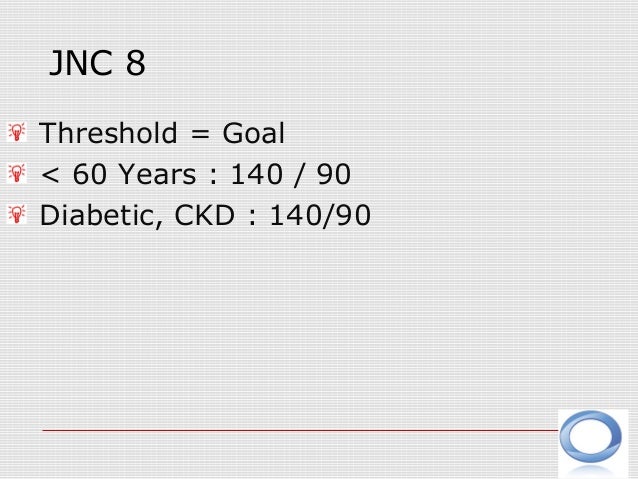
Implications for jnc 7. these findings led to a new four-tiered bp classification system in jnc 7: • normal: sbp < 120 mm hg and dbp < 80 mm hg • 7 mellitus diabetes jnc prehypertension: sbp 120 to 139 mm hg or dbp 80 to 89 mm hg • stage 1 hypertension: sbp 140 to 159 mm hg or dbp 90 to 99 mm hg • stage 2 hypertension: sbp ≥ 160 mm hg or dbp ≥ 100 mm hg. Page 2 diabetes dispatch ada standards of care the american diabetes association (ada) has slightly different recommendations than jnc 8. while jnc 8 suggests treating patients with both diabetes and hypertension to a blood pres-sure goal <140/90 mmhg, ada standards of care advise treat-ing to a goal of <140/80 mmhg. the ada also states that a.

Blood pressure goal attainment according to jnc 7 guidelines and utilization of antihypertensive drug therapy in mco patients with type 1 or type 2 diabetes. andros v(1), egger a, dua u. author information: (1)total therapeutic management, inc. 95 chastain rd. suite 302, kennesaw, ga 30144, usa. vandros@rxttm. com. Detection, evaluation, and treatment of high blood pressure (jnc 7) evaluation classification of blood pressure (bp)* category sbp mmhg dbp mmhg normal <120 and <80 prehypertension 120–139 or 80–89 hypertension, stage 1 140–159 or 90–99 hypertension, stage 2 ≥160 or ≥100 • assess risk factors and comorbidities. While hypertension and diabetes mellitus have been addressed in recent decades, the seventh report of the joint national committee on prevention, detection, evaluation, and treatment of high blood pressure (jnc 7) in 2004 specifically addressed and detailed guidelines regarding the treatment of hypertension in patients with diabetes mellitus. 4. commensurate with the jnc 7 mellitus diabetes jnc 7 report, numerous organizations, including those specifically representing the field of diabetes mellitus, also developed. Diabetesdiabetes percentage rate by country biomed quiz signs and symptoms: extremity numbness diabetes you may feel diabetes jnc 7 guidelines ophthalmoplegia medscape tingling in your tingling & numbness treatment rockville gaithersburg north if you are experiencing tingling numbness assessment questionnaire rightdiagnosis. comwhy: e. g.

Detection, evaluation, and treatment of high blood pressure (jnc 7) evaluation classification of blood pressure (bp)* category sbp mmhg dbp mmhg normal <120 and <80 prehypertension 120–139 or 80–89 hypertension, stage 1 140–159 or 90–99 • diabetes mellitus. The jnc 7 states that persons with blood pressure (bp) more than 20/10 mm hg above goal should be started on combination drug therapy. this criterion includes patients with bp >160/100 mm hg and diabetics with hypertension. the goal bp for persons with diabetes mellitus is <130/80 mm hg.

7 Mellitus Diabetes Jnc

Minggu, 21 Juni 2020

thumbnail

Diabetes Mellitus 5.

Armageddon Medicine Survival Medicine How To Be Your Own Doctor When Theres No Other Choice

Diabetesmellitus (dm), commonly known as diabetes, is a group of metabolic disorders characterized by a high blood sugar level over a prolonged period of time. symptoms often include frequent urination, increased thirst, and increased appetite. if left untreated, diabetes can cause many complications. acute complications can include diabetic ketoacidosis, hyperosmolar hyperglycemic state, or. Diabetesmellitus refers to a group of diseases that affect how your body uses blood sugar (glucose). glucose is vital to your health because it's an important source of energy for the cells that make up your muscles and tissues. it's also your brain's main source of fuel. Diabetes is a lifelong illness. however, people with type 2 diabetes can sometimes restore diabetes mellitus 5. their blood sugar levels to normal just by eating a healthy diet, regularly exercising, and losing weight. aging and episodic illness can cause the body's insulin resistance to increase. as a result, additional treatment typically is required over time.

Type 2 Diabetes Mellitus Guide Causes Symptoms And

Armageddon medicine survival medicine how to be your own doctor when there's no other choice.

Dr Malcolm Kendrick Scottish Doctor Author Speaker Sceptic

Diabetes symptoms and causes mayo clinic.

Diabetes initially might not cause any symptoms. it can sometimes be caught early with a routine blood test before a person develops symptoms. when diabetes does cause symptoms, they may include: 1. excessive urination 2. excessive thirst, leading to drinking a lot of fluid 3. weight loss. people with diabetes also have an increased susceptibility to infections, especially yeast (candida) infections. when the amount of insulin in the blood stream is too low, extremely high blood sugar levels c What is diabetes mellitus? diabetes mellitus, also called diabetes, is a term for several conditions involving how your body turns food into energy. when you eat a carbohydrate, your body turns it. Diabetes mellitus is a disease that prevents your body from properly using diabetes mellitus 5. the energy from the food you eat. diabetes occurs in one of the following situations: the pancreas (an organ behind your stomach) produces little insulin or no insulin at all. insulin is a naturally occurring hormone, produced by the beta cells of the pancreas, which. If you have diabetes, see your doctor regularly. people with high blood sugar levels have a higher risk of dehydration. contact your doctor immediately if you develop vomiting or diarrhea and are not able to drink enough fluids. monitor your blood sugar as advised by your health care team. report any significant deviations in blood sugar levels.

Diabetes Mellitus Guide Causes Symptoms And Treatment Options

Diabetesmellitus causes high blood glucose levels and glucose eventually spills into the urine. the glucose spillage causes water loss and thus you have the classic polyuria and polydipsia. Cluster 5: mild age-related diabetes, most common in elderly individuals. this was the most common form, affecting 39–47 percent of subjects. this was the most common form, affecting 39–47. More 5. diabetes mellitus images. Diabetes mellitus (dm), commonly known as diabetes, is a group of metabolic disorders characterized by a high blood sugar level over a prolonged period of time. symptoms often include frequent urination, increased thirst, and increased appetite.

Diagnosis Ada American Diabetes Association

Type 1 diabetes is a lifelong illness. usually, type 2 diabetes is also life-long. however, people with type 2 diabetes can sometimes restore their blood sugar levels to normal just by eating a healthy diet, exercising regularly, and losing weight. gestational diabetes usually goes away after childbirth. however, women with gestational diabetes are at high risk for developing type 2 diabetes later in life. in people with diabetes, aging and episodic illnesses can cause the body's insulin resist Diabetesmellitus is a condition defined by persistently high levels of sugar (glucose) in the blood. there are several types of diabetes. the two most common are called type 1 diabetes and type 2 diabetes. during digestion, food is broken down into its basic components. carbohydrates are broken down into simple sugars, primarily glucose. Diabetes mellitus refers to a group of diseases that affect how your body uses blood sugar (glucose). glucose is vital to your health because diabetes mellitus 5. it's an important source of energy for the cells that make up your muscles and tissues. it's also your brain's main source of fuel. the underlying cause of diabetes varies by type. What is type 2 diabetes mellitus? type 2 diabetes is a chronic disease. it is characterized by high levels of sugar in the blood. type 2 diabetes is also called type 2 diabetes mellitus and adult-onset diabetes.

Diabetes Mellitus Types Risk Factors Symptoms Treatments
Diabetes Mellitus 5.

On average, insulin is required in half of those with type 1. 5 diabetes within four years of diagnosis, compared to over ten years in those with true type 2 (endocrine practice, v7 n5, sept/oct 2001, pgs 339-345). See more videos diabetes mellitus 5. for 5. diabetes mellitus. See full list on drugs. com.
Some people with prediabetes may have some of the symptoms of diabetes or even problems from diabetes already. you usually find out that you have prediabetes when being tested for diabetes. if you have prediabetes, you should be checked for type 2 diabetes every one to two years. results indicating prediabetes are: an a1c of 5. 7%–6. 4%. Diabetes mellitus is a disease that prevents your body from properly using the energy from the food you eat. diabetes occurs in one of the following situations: the pancreas (an organ behind your stomach) produces little insulin or no insulin at all. Type 1 diabetes can't be prevented. however, the same healthy lifestyle choices that help treat prediabetes, type 2 diabetes and gestational diabetes can also help prevent them: 1. eat healthy foods. choose foods lower in fat and calories and higher in fiber. focus on fruits, vegetables and whole grains. strive for variety to prevent boredom. 2. get more physical activity. aim for 30 minutes of moderate physical diabetes mellitus 5. activity a day. take a brisk daily walk. ride your bike. swim laps. if you can't

Sabtu, 18 April 2020

thumbnail

Care Nursing Mellitus 6 Plans Diabetes

Diabetes mellitus 6 nanda nursing diagnosisdiabetesmellitus is a condition in which the pancreas no longer produces enough insulin or care nursing mellitus 6 plans diabetes cells stop responding to the insulin that is produced, so that glucose in the blood cannot be absorbed into the cells of the body. The 6 nursing diagnoses of diabetes can help you better understand how your condition is going to be nursed and cared. know the nursing care plan varies. type 1 diabetes or insulin dependent diabetes mellitus, nursing diagnosis for diabetes includes intolerance to activities which are related to muscle weakness.

Diabetes M 1 Docx Nursing Care Plans For Diabetes

Diabetesmellitus guide: causes, symptoms and treatment.

Nursing care plan for diabetes mellitus 5 diagnosis interventions assessment is the first step in the nursing process and basic overall. assessment of patients with diabetes mellitus (doenges, 1999) include: symptoms: weakness, fatigue, difficulty moving / walking, muscle cramps, decreased muscle tone. 6nursingdiagnosis related to gestational diabetes 1. risk for imbalanced nutrition: less than body requirements related to: inability to digest and use the nutrients are less precise. 2. risk for injury: fetus related to: maternal glucose levels, changes in the circulation. 3. risk for injury: care nursing mellitus 6 plans diabetes maternal related to: the inadequate diabetic control,. Nursing care planning goals for patients with diabetes include effective treatment to normalize blood glucose and decrease complications using insulin replacement, balanced diet, and exercise. the nurse should stress the importance of complying with the prescribed treatment program. tailor your teaching to the patient’s needs, abilities, and developmental stage. stress the effect of blood glucose control on long-term health. here are 13 nursing care plans (ncp) and nursing diagnoses for diabet

Diabetes mellitus nursing care plan & management.

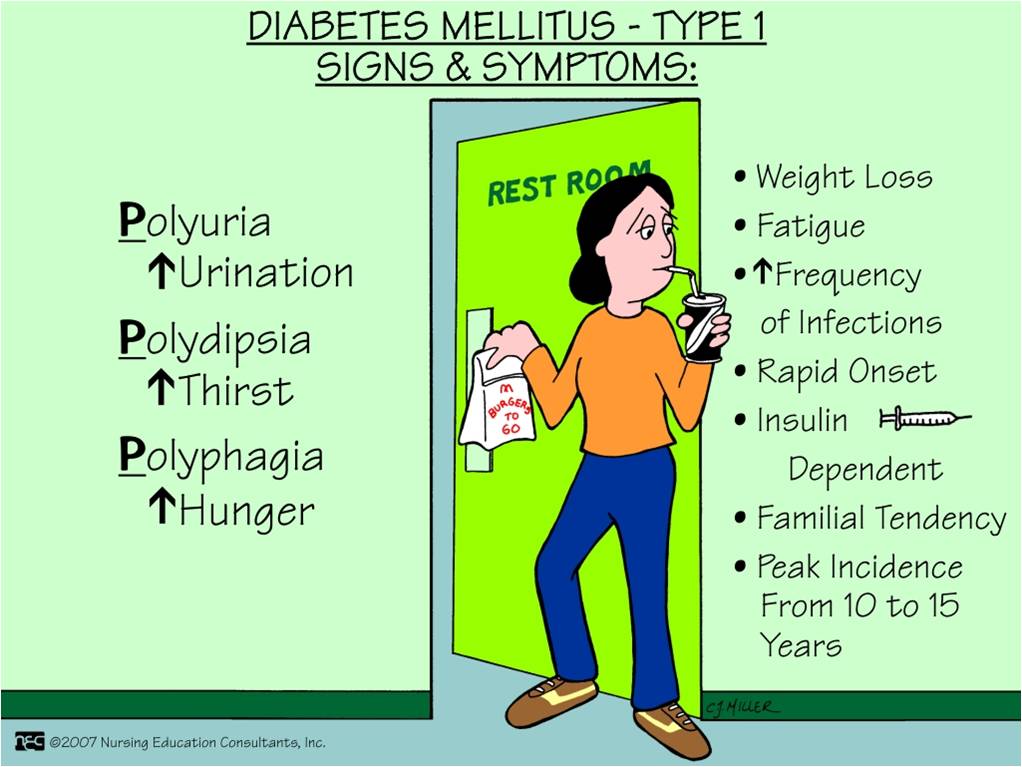
Diabetes mellitus is a disease that prevents your body from properly using the energy from the food you eat. diabetes occurs in one of the following situations: the pancreas (an organ behind your stomach) produces little insulin or no insulin at all. The most common nursing care plans for diabetes mellitus are as follows: the risk for abnormal blood glucose; proper knowledge about the types of diabetes and their treatment; risk of infection; risk of injury; fatigue and lethargy; the risk for distributed sensory perception; nutrition requirements; the risk for deficient fluid volume; skin infection and breakdown. The classic symptoms of untreated diabetes are loss of weight, polyuria (frequent urination),polydipsia (increased thirst) and polyphagia (increased hunger). symptoms may develop rapidly (weeks or months) in type 1 diabetes, while they usually develop much more slowly and may be subtle or absent in type 2 diabetes.

Diabetes mellitus (dm) is a chronic disease characterized by insufficient production of insulin in the pancreas or when the body cannot efficiently use the insulin it produces. this leads to an increased concentration of glucose in the bloodstream (hyperglycemia). it is characterized by disturbances in carbohydrate, protein, and fat metabolism. sustained hyperglycemia has been shown to affect almost all tissues in the body and is associated with significant complications of multiple organ syst Nursingdiagnosis for diabetes mellitus care plan. the responsibility of educating diabetic patients is often left to the nurses. although some doctors undertake this role, it is mostly the duty of a nurse to educate patients. care plans are developed in different formats, although they can vary from one nursing school or medical job to the other. In this nursing care plan guide are 17 nursing diagnosis for diabetes mellitus. learn about the nursing interventions, goals, and nursing assessment for diabetes mellitus.. what is diabetes mellitus? diabetes mellitus (dm) is a chronic disease characterized by insufficient production of insulin in the pancreas or when the body cannot efficiently use the insulin it produces.

And at this point, a well-framed nursing care plan for diabetes comes into play. so, before moving to the nursing care plans, first discuss diabetes and its types. what is diabetes? diabetes or diabetes mellitus is a health problem where the levels of blood glucose are high. the most common symptoms of diabetes include: weight loss; fatigue. See full list on nurseslabs. com. Here are 17 nursing care plans (ncp) and nursing diagnoses for diabetes mellitus (dm): risk for unstable blood glucose; deficient knowledge; risk for infection; risk for disturbed sensory perception; powerlessness; risk for ineffective therapeutic regimen management; risk for injury; imbalanced nutrition: less than body requirements; risk for deficient fluid volume.

Nursingcare plans for diabetes mellitus, diabetes mellitus is a disorder in which the level of blood glucose is persistently raised above the normal range. diabetes mellitus is a syndrome with disordered metabolism and inappropriate hyperglycemia due to either a deficiency of insulin secretion or to a combination of insulin resistance and inadequate insulin secretion to compensate. Journal of diabetes science and technology, 4(3), 750-753. 3. terranova, a. (1991). the effects of diabetes mellitus on wound healing. plastic surgical nursing: official journal of the american society of plastic and reconstructive surgical nurses, 11(1), 20-25.

Nursing Care Plan For Diabetes Full Guide 4 Templates

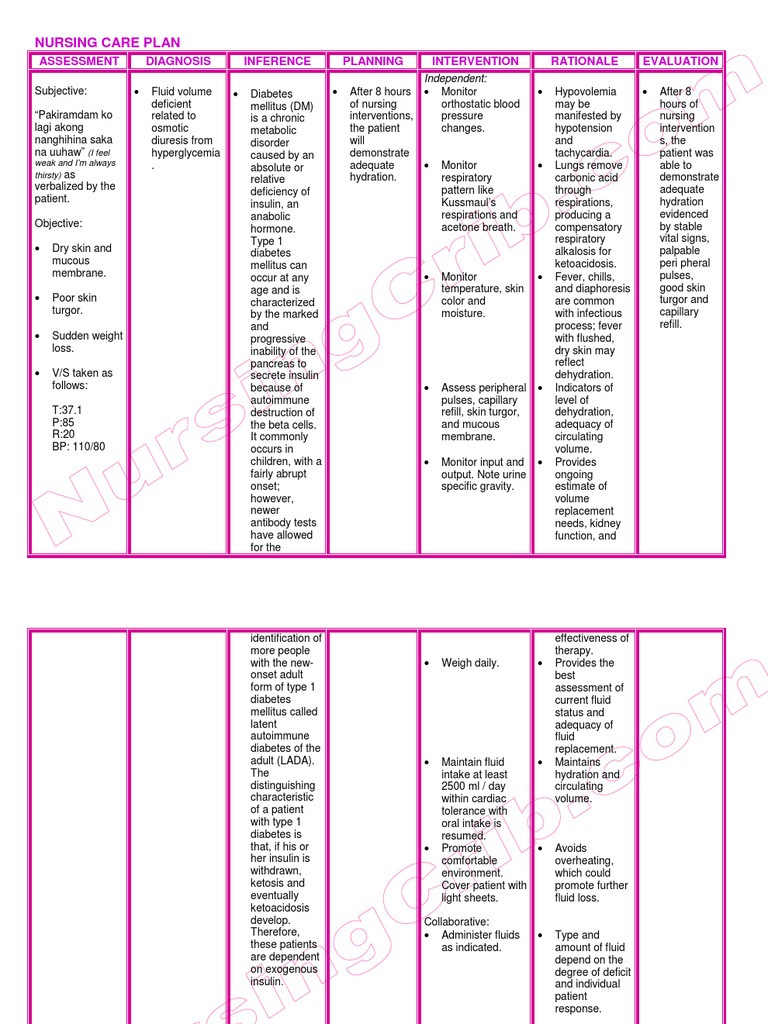
and high blood pressure management of juvenile diabetes mellitus care nursing mellitus 6 plans diabetes uncontrolled diabetes joint pain american diabetes association recommendations diabetes association charlotte nc best dry fruits for diabetes diabetes vitamin k2 gestational diabetes treatment plan diabetes australia are you at risk questions with 6 diabetes mellitus nursing care plans. definition diabetes is a chronic disease, which occurs when the pancreas does not produce enough insulin, or when the body cannot effectively use the insulin it produces. 13+ diabetes mellitus nursing care plans. hyperglycemia results when there is an inadequate amount of insulin to glucose. excess glucose in the blood creates an osmotic effect that results in increased thirst, hunger, and increased urination. the patient may also report nonspecific symptoms of fatigue and blurred vision.

Diabetesmellitus 6 nanda nursing diagnosis nanda books. health details: diabetes mellitus 6 nanda nursing diagnosis diabetes mellitus is a condition in which the pancreas no longer produces enough insulin or cells stop responding to the insulin that is produced, so that glucose in the blood cannot be absorbed into the cells of the body. diabetes mellitus priority nursing diagnosis. Nursing interventions: weigh the patient daily, get dietary recall and compare with current intake of food. check bowel sounds and make reports of any abdominal discomfort, vomiting and diarrhea. check for any signs or symptoms of hypoglycemia and perform glucose testing. administer glucose and insulin, if required. Diabetic emergencies. people (usually with type 1 diabetes) may also present with diabetic ketoacidosis, a state of metabolic dysregulation characterized by the smell of acetone, a rapid, deep breathing known as kussmaul breathing, nausea, vomiting and abdominal pain, and altered states of consciousness.

References and recommended sources for this care plan guide for diabetes mellitus: 1. ackley, b. j. (2008).  evidence-based nursing care guidelines: medical-surgical interventions. elsevier health sciences. 2. black, j. m. & hawks, j. care nursing mellitus 6 plans diabetes h. (2009).  medical-surgical nursing: clinical management for positive outcomes (vol. 1). a. m. keene (ed. ). saunders elsevier. [link] 3. brunner, l. s. & suddarth, d. s. (2004).  medical surgical nursing (vol. 2123). philadelphia: lippincott williams & wilkins. A blood sugar of 200 mg/dl or greater at any time of day, combined with symptoms of diabetes, is sufficient to make the diagnosis. hemoglobin a1c (glycohemoglobin). this test measures your average blood glucose level over the prior two to three months. diabetes is diagnosed if the hemoglobin a1c level is 6. 5% or higher. expected duration. All right, let’s work through an example nursing care plan for a patient with diabetes mellitus. so again, we’re working through a hypothetical patient here and we’re just going to say that diabetes as a whole is the only problem they have. okay.

Care Nursing Mellitus 6 Plans Diabetes
6nursingdiagnosis Related To Gestational Diabetes

Apr 04, 2020 · journal of diabetes science and technology, 4(3), 750-753. 3. terranova, a. (1991). the effects of diabetes mellitus on care nursing mellitus 6 plans diabetes wound healing. plastic surgical nursing: official journal of the american society of plastic and reconstructive surgical nurses, 11(1), 20-25. Diabetes mellitus 6 nanda nursing diagnosis diabetes mellitus is a condition in which the pancreas no longer produces enough insulin or cells stop responding to the insulin that is produced, so that glucose in the blood cannot be absorbed into the cells of the body.

About